The polity in the northern part of this country has been inexorably heating up in recent times. Insecurity in this region used to be confined mainly to robbery and political assassination, as well as occasional bursts of sectarian violence defined as religious and ethnic crises, most of which the police have failed to solve. The biggest threat to life and property today, however, is the spiralling increase in bombings and the scare they inspire in our communities. Of particular concern are the activities of the now famous religious sect, Boko Haram.
This sect used to be based only in Maiduguri, Borno State, as well as parts of Yobe and Bauchi states, but it appears that it is now festering in Kaduna. Indeed, security analysts fear that the phenomenon may extend to other states.
Clearly, the problem is refusing to be contained; it is rather worsening, with bombs going off in Maiduguri any time the sect wants. Presently, a bomb scare in Kaduna and environs is threatening the peace and stability of the whole state. Wherever the bombs went off – in Maiduguri, Bauchi, Kaduna, Suleja, and even in Abuja – they left in their wake the death of innocent people, destruction of property and a huge cloud of fear.
A great deal of damage has already been done on both sides: from the massacre of religious militants by the security forces and revenge killings of policemen, soldiers, politicians and civil servants to the destruction of property owned by individuals and government.
The damage done to the national psyche by this scary development is unquantifiable. The society has been divided into bits and pieces – among the Muslims and between Christians and Muslims. There is a worsening crisis of confidence among the populace, a crisis which has since redefined the meaning of the word ‘North.’ If this pervasive cloud of fear and uncertainty continues unchecked, as it seems to be doing right now, only God knows what will become of this region (and by extension the whole country) in the next few years.
What are the nation’s leaders doing about the problem? So much on the surface, but virtually nothing in concrete terms. Nothing exemplifies this disturbing reality more than the high-level security meeting headed last week by Vice-President Mohammed Namadi Sambo in his office in Abuja. The meeting, attended by top security chiefs and the Borno State governor, portrayed the leaders’ dilemma and helplessness over the Boko Haram challenge. Their hair-brained solution to the problem, in summary, is the carrot-and-stick approach. It means, as Governor Kashim Shettima revealed after the meeting, that the federal and the state governments are going to try to cajole the Boko Haram to a peace meeting, the failure of which would lead to a vociferous crackdown on the sect, using all the firepower at government’s disposal. Government cannot afford to appear weak, he said.
A similar threat, it should be remembered, did not succeed with the Niger Delta militants. What succeeded eventually was a political solution, whereby President Umaru Yar’Adua announced an unconditional amnesty for all the anti-oil exploration insurgents. This came after a massive bombardment of the militants’ camps failed to bear fruits. It was the amnesty deal, rather than the military action, which drew the militants out of their riverine hideouts to presidential red carpet in Abuja.
Now, while the Niger Delta militants had identifiable political and military leaders, Boko Haram’s are completely unknown. To draw them out, the government must abandon all threats of a military crackdown and insist on a political solution. The new Borno governor has wisely offered an olive branch, which the insurgents rejected; he should follow that up with a cessation of security onslaught. President Goodluck Jonathan should also announce an unconditional amnesty and begin to implement developmental programmes that will address the perceived injustices done to a great number of interest groups in the North. He should remember that it was police action, followed by a massive military onslaught, which instigated the insurgency. Former governor Ali Modu Sheriff exacerbated it by continuing with the crackdown. Now something has to give. The bloodshed is enough, please.
Published in my column in BLUEPRINT newspaper on Monday, June 13, 2011
Saturday, 18 June 2011


Wednesday, 8 June 2011
The best revenge for Kwankwaso

One of the hotly contested gubernatorial elections this year was the one in Kano State, where Rabi’u Musa Kwankwaso made a dramatic return to the seat he lost in 2003. The stakes were high, and the pressure feverish, because of the fact that Engineer Kwankwaso’s 2003 defeat was one of the greatest humiliations ever suffered by a Nigerian politician. In that election, the opposition ANPP successfully wrested the baton from his firm grip in spite of all the fabled power of incumbency. The new government, under a rustic former schoolteacher, Malam Ibrahim Shekarau, decided to worsen Kwankwaso’s woes by instituting a commission of enquiry which, ultimately, indicted him. The purpose of that commission, as many analysts saw, was to portray the ousted governor as a criminal and foreclose his chance of bouncing back as a politician of reckon. Indeed, several attempts were made to have Kwankwaso arrested. But they failed, mainly because the government at the centre was a PDP one. Indeed, as a slap on the face of the ANPP administration, Kwankwaso was made foreign minister. From that vantage point, he retained his relevance in his state. The bitterness and acrimony between him and Shekarau, however, ran through all the eight years that the latter held sway in the state. So overwhelming was the power wielded by Shekarau that many political pundits wrote Kwankwaso off.
As it turned out, however, not only was Kwankwaso able to survive his detractors, he was also able to win back his gubernatorial seat, no thanks to the deadly in-fighting within the ANPP in the state and Shekarau’s unwise decision to leave his primary constituency in search of the presidency.
Now, ever since Kwankwaso’s triumphant re-entry into Government House, many analysts have smelt the blood of revenge even before he started sharpening his knife. It was felt that a Kwankwaso government was bound to take its pound of flesh from its predecessor’s. One of the reasons being adduced was that since Shekarau had mauled his own predecessor so mercilessly, he should not expect any sympathies, too. Indeed, pronouncements coming from the Kwankwaso administration’s would-be officials have since confirmed fears that revenge was really on the drawing board. Even though the returnee governor has tried, in his press interviews, to dispel that notion, his body language and other pronouncements are suggesting the contrary. I feel that many in Kano would be hugely disappointed if Kwankwaso does not probe Shekarau and wash the Malam’s dirty linen in Sabon Gari Market.
But is there a need to run a revenge government in the manner some Kanawa and others want? The answer is no. It is not in the real interest of the people of Kano, including the Kwankwaso crowd, to commit themselves to “exposing” Shekarau with the view of “showing him for what he is”, as the rhetoric goes. My reason is that operating a revenge regime would be time-wasting, costly and obfuscating the real purpose of winning the election. It would create more bad blood and tension amongst the people just as it would divert attention from governance and holding elected officials to account.
The main reason Kwankwaso was re-elected was the Kanawa’s dire need for change. Their heroic decision to bring back a man who was so maligned that you would think he could never win an election in his street was the biggest confirmation that the people wanted him to come and complete the developmental projects he started before he was shown the door in 2003.
The sweetest revenge Kwankwaso should take against Shekarau, if ever there should be one, is to disappoint those goading him into launching a revenge mission and, instead, concentrate all his energies on executing developmental projects. I tend to believe that that’s why he sought re-election, and not an ego-trip of “proving Shekarau wrong” and avenging some wrongs. After all, God, who brought him back, has shown His magnanimity by proving the sceptics wrong. The best appreciation Kwankwaso should give the Almighty is to work selflessly for the electorate who yearn for better education, security, atmosphere for trading, water, health care and other dividends of democracy.
-----
Published in the current edition BLUEPRINT, our weekly newspaper
Friday, 27 May 2011
Jang's 'Operation Rainbow'
A brand new security outfit, “Operation Rainbow,” has begun an arduous task of bringing permanent peace to beleaguered Plateau State. Set up by the state government with the support of the President, it is made up of 3,250 personnel consisting 10 youths from each of the 325 wards in the state who will serve as “neighbourhood watch men.” These watch men will not, however, carry arms at all; other members of the outfit, about 2,000 men drawn from military and paramilitary outfits, are the ones who will.
There is confidence in the government’s circles that the new arrangement will work. One hopes that it does. However, beyond keeping an eye on neighbourhoods, are there other measures being put in place to consolidate on any gains to be made by the current initiative? The Plateau saga has developed deep roots of animosity in recent years, but the main questions towards finding lasting solutions are just few.
In my piece, “Taking the Devil Out of Plateau,” which was published in my back-page column in the Leadership Weekend on January 1, 2011, I argued that the cycle of sectarian violence in this once-serene state, which has consumed hundreds if not thousands of innocent lives, was caused principally by the personal leadership style of Governor Jonah David Jang. Hitherto, most observers had referred to a nebulous “failure of leadership”. But I wrote: “A wide spectrum of opinion in and out of Plateau is agreed on one indisputable fact: Jang is part of the problem – if not THE problem – in the resolution of the Plateau conundrum. His failure to provide statesmanlike leadership in his domain, by either wilfully fanning the embers of the crisis or from sheer incompetence, has been an obstacle in the way of finding a lasting peace. Many Christian leaders who are not afraid to tell the truth believe that the governor is pitifully incapable of solving this seemingly intractable problem; instead, he has been chasing shadows – such as blaming his opponents within his own political party. This gargantuan failure is responsible for the unending calls from both sides of the divide for the imposition of a state of emergency in the state.
“In more civilised climes, Jang would have resigned from office long ago. Amazingly, he is eyeing another four-year term as governor! But it is imperative for him to quit the Rayfield Government House at the end of his first four-year tenure and not seek re-election. This is because it is easy to surmise that four more years of him as governor could mean four more years of conflict in Plateau State; four more years of hundreds or thousands killed, and four more years of the wild goose chase and failure to end the inter-ethnic and inter-religious divisions in the state...
“If Jang refuses to see the light and decides to carry on at all cost, then the good people of Plateau State must vote him out this year. In a democratic dispensation, and with the promise of free and fair polls, any recalcitrant politician must be shown the door by the electorate in a peaceful manner.”
Well, as it turned out, Jang was able to secure for himself that coveted second term, benefiting from the special status the ruling PDP conferred on Plateau. The question now is whether Jang has learned any lessons from his bloody first term vis-a-vis the security situation in his state. If he has, then, is “Operation Rainbow” a part of his plans to ensure that the murderous killings are not repeated? I sorely want my prediction of a second Jang tenure to be disproved because the killing of a single soul gives me the jitters. Plateau must never be allowed to burn again. And all depends on the manner and style the governor decides to administer the state. If he has learnt to stop blabbing about the ‘indigene’-versus-‘settler’ dichotomy imposed by politicians like him, and if he regards himself as the father of all in the state and rules fairly and justly, then things would fall in place.
Here is wishing “Operation Rainbow” good luck and praying that Plateau will live in peace forever and ever. Amen.
---
Published in the current issue of BLUEPRINT
There is confidence in the government’s circles that the new arrangement will work. One hopes that it does. However, beyond keeping an eye on neighbourhoods, are there other measures being put in place to consolidate on any gains to be made by the current initiative? The Plateau saga has developed deep roots of animosity in recent years, but the main questions towards finding lasting solutions are just few.
In my piece, “Taking the Devil Out of Plateau,” which was published in my back-page column in the Leadership Weekend on January 1, 2011, I argued that the cycle of sectarian violence in this once-serene state, which has consumed hundreds if not thousands of innocent lives, was caused principally by the personal leadership style of Governor Jonah David Jang. Hitherto, most observers had referred to a nebulous “failure of leadership”. But I wrote: “A wide spectrum of opinion in and out of Plateau is agreed on one indisputable fact: Jang is part of the problem – if not THE problem – in the resolution of the Plateau conundrum. His failure to provide statesmanlike leadership in his domain, by either wilfully fanning the embers of the crisis or from sheer incompetence, has been an obstacle in the way of finding a lasting peace. Many Christian leaders who are not afraid to tell the truth believe that the governor is pitifully incapable of solving this seemingly intractable problem; instead, he has been chasing shadows – such as blaming his opponents within his own political party. This gargantuan failure is responsible for the unending calls from both sides of the divide for the imposition of a state of emergency in the state.
“In more civilised climes, Jang would have resigned from office long ago. Amazingly, he is eyeing another four-year term as governor! But it is imperative for him to quit the Rayfield Government House at the end of his first four-year tenure and not seek re-election. This is because it is easy to surmise that four more years of him as governor could mean four more years of conflict in Plateau State; four more years of hundreds or thousands killed, and four more years of the wild goose chase and failure to end the inter-ethnic and inter-religious divisions in the state...
“If Jang refuses to see the light and decides to carry on at all cost, then the good people of Plateau State must vote him out this year. In a democratic dispensation, and with the promise of free and fair polls, any recalcitrant politician must be shown the door by the electorate in a peaceful manner.”
Well, as it turned out, Jang was able to secure for himself that coveted second term, benefiting from the special status the ruling PDP conferred on Plateau. The question now is whether Jang has learned any lessons from his bloody first term vis-a-vis the security situation in his state. If he has, then, is “Operation Rainbow” a part of his plans to ensure that the murderous killings are not repeated? I sorely want my prediction of a second Jang tenure to be disproved because the killing of a single soul gives me the jitters. Plateau must never be allowed to burn again. And all depends on the manner and style the governor decides to administer the state. If he has learnt to stop blabbing about the ‘indigene’-versus-‘settler’ dichotomy imposed by politicians like him, and if he regards himself as the father of all in the state and rules fairly and justly, then things would fall in place.
Here is wishing “Operation Rainbow” good luck and praying that Plateau will live in peace forever and ever. Amen.
---
Published in the current issue of BLUEPRINT
Is Sanusi pushing us towards the Stone Age?
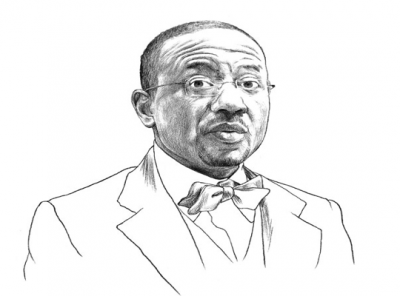
Malam Sanusi Lamido Sanusi is a man whose sense of judgement I would not rush to condemn. His anti-corruption crusade in the banking industry has led to the jailing of hitherto untouchable bank executives and the bail-out of the five big banks that were brought almost to their knees by those thieving, irresponsible bank CEOs, among others. Sanusi’s watershed actions have been endorsed by highly regarded international agencies. Some youths are so proud of the Kano prince that they have in recent times begun a SLS-for-President-in-2015 campaign on Facebook; they see in him a credible, formidable candidate the North could present in the next polls.
My faith in the man, however, faltered recently when the Central Bank of Nigeria (CBN) announced a policy that would limit cash withdrawals by individuals to N150,000 and by corporate bodies to N1 million only per day. “Silly,” was the word that first came to mind, knowing that in our kind of society the policy would surely bomb even before it takes off. The CBN intends to start operating the policy from June 1, next year, in the urban centres of Lagos, Aba, Port Harcourt, Abuja and Kano. The idea, according to the smart alecks under Governor Sanusi, is to encourage the nation to start moving towards a “cashless economy” such as the ones we see in developed countries.
On face value, the policy is good because it is an extension of the CBN governor’s legendary anti-corruption fight; it is believed by its supporters that most huge chunks of money withdrawn from banks are for corrupt purposes like money laundering and payment of kickbacks. It would check inflation, they say. The policy, according to these proponents, would also discourage the movement of huge sums that should remain in bank vaults. Moreover, it would help modernise our financial system further and bring it closer to those of developed economies.
Granted that these are welcomed ideas. But would they translate into the overnight modernisation of the system? In the first place, the policy is cumbersome; one Facebooker wondered: “So, if I want to use let’s say N750k from my account, does that mean I should start withdrawing from Monday, each day N150k?” This shows that the amounts pegged are too small. This fact is even more glaring when you consider that our economy is not THAT developed; people are still learning how to use simple devises such as the ATM, with many in fact running away from them. Credit card usage is very minimal.
I also beg to disagree with those who claim that most huge withdrawals are for laundering, kickbacks and money politics. Crooks can still do these within the proposed limits as they are going to find ways to circumvent the rules in spite of the CBN’s threat. For instance, individuals would register fake companies in order to be able to withdraw high sums for personal use. I rather tend to look at the mind-boggling cash transactions taking place in our big markets, where grain merchants, cloth dealers, car sellers, etc., engage in mostly gargantuan cash transactions.
The CBN has over 12 months to force the policy down our throats, as such there is time to re-examine it. The first thing the apex bank should consider is the small size of the pegged amounts. One, therefore, suggests that the withdrawal limits should be raised to N500,000 for individuals and N3 million for corporate customers. Two, the bank should extend the take-off date of the policy by another year. Within this period, it should gear attention towards readying the country for an electronic economy, complete with a suffusion of credit card usage nationwide and strengthening of the naira’s value, among others. We should take note that enforcing Sanusi’s new initiative without amendments could virtually take the nation back to the Stone Age where monies were kept under beds or, to put it appropriately, under stones. Needless to say, thieves and armed robbers would find it easier to collect money from persons and families who are forced to keep their cash within reach.
---
Published in the 1st issue of BLUEPRINT, on May 16, 2011
A Bermuda Triangle Called Gonin Gora
Mohammed Bawa, a colleague of ours in the ‘pen-pushing’ profession, had bid farewell to his family and friends, finished a few chores at the office of another colleague, and drove out of Kaduna. He was in high spirits, especially as he was driving a car he had wanted to buy from his friend. Indeed, he had dropped his old jalopy at the friend’s office and “seized” this one, joking that they would settle on the price when he came back from Abuja. Now his mind was focussed on the business that was taking him to the nation’s capital. I imagine that he was whistling out of joy and sense of fulfilment.
At Gonin Gora, a suburb of Kaduna, the road was suddenly blocked by some youths who were carrying an assortment of weapons and mouthing expletives. Before he knew it, Bawa was being attacked by the youths. He could not save himself. The story we heard later was that he was killed right there in his car just as the vehicle was set ablaze by his attackers.
That gruesome event took place on Monday, February 21, 2000. Bawa, the first managing director of Desmims Independent Television (DITV), Kaduna, which prides itself as the first privately owned TV station to go on air after the liberalisation of the broadcasting industry by the Babangida administration, was not murdered because of any fault of his; it was merely on account of his being a Muslim. Many who heard about the incident wondered why he ventured out of town at that time when there was palpable tension throughout Kaduna State on that day. The tension was caused by the decision of the state government to introduce the Sharia legal system as demanded by Muslim citizens. A 15-member, all-Muslim committee had been set up by the state House of Assembly, which had submitted a report that said it had received 133 oral presentations, out of which only 13 were against the introduction of Sharia in the state. It had also collected 267 written memoranda, out of which only seven were against Sharia implementation.
The conflict, which raged for two days, spread to other towns like Kafanchan and Zaria, and flared in faraway Lagos, Aba and Umuahia. The police claimed that 700 people were killed, but independent sources said it was thousands. The government said hundreds were injured, while 1,950 buildings, 746 vehicles, 55 mosques and 123 churches were destroyed. It was one of the deadliest ethno-religious crises ever seen in this country, with sophisticated weapons such as rocket launchers, bombs, grenades and locally-made pistols freely used.
Gonin Gora, where Bawa was killed, is especially significant because of its position in such conflicts. Its placement on an important thoroughfare which links the nation’s capital to Kaduna, Kano, Jigawa, Katsina, Zamfara, Sokoto and Kebbi states makes it symbolic in the kind of brutal social relations existing between Christians and Muslims in the north. Because it consists of a largely Christian population, Gonin Gora has become a Bermuda Triangle of sorts to Muslims whenever a conflict occurs. During the recent post-election conflict, many unsuspecting Muslim travellers were killed there, and properties belonging to Muslims were destroyed, especially on the first day before security forces were deployed to sanitise the situation. During the violence, Gonin Gora was a no-go area for any Muslim traveller.
But, then, there are many Gonin Goras in the north. There are areas where Christians are trapped and killed as soon as sectarian conflicts break out. They become impassable to Christians. In fact, I know areas in Kaduna where a Christian dares not live, and there are some where a Muslim cannot live.
Such Bermuda Triangles are, however, a recent phenomenon. Kaduna and many other towns used to have mixed populations, with Christians and Muslims living and relating freely with one another -- eating together, celebrating together, mourning together and dreaming together. There is need to bring back such halcyon times, otherwise the search for peace in our communities would continue to be elusive.
---
Published in the preview edition of BLUEPRINT
At Gonin Gora, a suburb of Kaduna, the road was suddenly blocked by some youths who were carrying an assortment of weapons and mouthing expletives. Before he knew it, Bawa was being attacked by the youths. He could not save himself. The story we heard later was that he was killed right there in his car just as the vehicle was set ablaze by his attackers.
That gruesome event took place on Monday, February 21, 2000. Bawa, the first managing director of Desmims Independent Television (DITV), Kaduna, which prides itself as the first privately owned TV station to go on air after the liberalisation of the broadcasting industry by the Babangida administration, was not murdered because of any fault of his; it was merely on account of his being a Muslim. Many who heard about the incident wondered why he ventured out of town at that time when there was palpable tension throughout Kaduna State on that day. The tension was caused by the decision of the state government to introduce the Sharia legal system as demanded by Muslim citizens. A 15-member, all-Muslim committee had been set up by the state House of Assembly, which had submitted a report that said it had received 133 oral presentations, out of which only 13 were against the introduction of Sharia in the state. It had also collected 267 written memoranda, out of which only seven were against Sharia implementation.
The conflict, which raged for two days, spread to other towns like Kafanchan and Zaria, and flared in faraway Lagos, Aba and Umuahia. The police claimed that 700 people were killed, but independent sources said it was thousands. The government said hundreds were injured, while 1,950 buildings, 746 vehicles, 55 mosques and 123 churches were destroyed. It was one of the deadliest ethno-religious crises ever seen in this country, with sophisticated weapons such as rocket launchers, bombs, grenades and locally-made pistols freely used.
Gonin Gora, where Bawa was killed, is especially significant because of its position in such conflicts. Its placement on an important thoroughfare which links the nation’s capital to Kaduna, Kano, Jigawa, Katsina, Zamfara, Sokoto and Kebbi states makes it symbolic in the kind of brutal social relations existing between Christians and Muslims in the north. Because it consists of a largely Christian population, Gonin Gora has become a Bermuda Triangle of sorts to Muslims whenever a conflict occurs. During the recent post-election conflict, many unsuspecting Muslim travellers were killed there, and properties belonging to Muslims were destroyed, especially on the first day before security forces were deployed to sanitise the situation. During the violence, Gonin Gora was a no-go area for any Muslim traveller.
But, then, there are many Gonin Goras in the north. There are areas where Christians are trapped and killed as soon as sectarian conflicts break out. They become impassable to Christians. In fact, I know areas in Kaduna where a Christian dares not live, and there are some where a Muslim cannot live.
Such Bermuda Triangles are, however, a recent phenomenon. Kaduna and many other towns used to have mixed populations, with Christians and Muslims living and relating freely with one another -- eating together, celebrating together, mourning together and dreaming together. There is need to bring back such halcyon times, otherwise the search for peace in our communities would continue to be elusive.
---
Published in the preview edition of BLUEPRINT
Saturday, 19 March 2011
Lola Shoneyin’s Night
 |
| Shoneyin reading last night. Photo by me! |
Last night, between 4-7 pm, the Abuja branch of the Association of Nigerian Authors (ANA) held a poetry reading session to mark the World Poetry Day. I attended the event which held at Harmonia Hotel in Garki, Abuja. And I was glad I did; reason: I was opportune to “catch up” with faces on the Nigerian literary scene I had not seen in months (some in years). They included the two guest poets, Lola Shoneyin and Kabura Zakama, both of whom are upcoming young writers who have since been making waves in the circle of Nigerian writing. There was also frontline poet and scholar, Prof. Remi Raji, head of the Department of English, University ofIbadan, who came specifically to canvass support for his candidature for the presidency of ANA. And there were many others: Ahmed Maiwada, Odoh Diego Okenyodo, Jerry Adesewo, etc. It was a great fraternity.
It was nice for me to see Mrs Shoneyin after so many years. The last time we met was in Ilesha, Osun State, in 1998, during the national convention of ANA. That was the year her first book, a collection of poems with the longish title, “So All The Time I Was Sitting On An Egg,” was published. Her name on the book cover then was Titilola Alexandra Shoneyin. I had gone to last night’s event with a copy of the book, which she autographed for me on October 30, 1998, thinking she was going to read from it. But as it turned out, she read from her newest poetry collection, “For the Love of Flight,” published in 2010 by Cassava Republic, Abuja.
Lola Shoneyin read first, followed by Kabura Zakama. The latter presented poems on his lost love as well as on the state of Nigerian democracy. One poem dealt with his inability to express his love to a particular woman, and another was on the farce called civilian rule in this country. Zakama explained that he began to write “anger poetry” during the military rule of Gen. Sani Abacha.
Shoneyin read four poems: “The Head Story,” “Distance,” “For Kiitan,” and “Jolademi,” the last two being the names of her sons. All the poems she read were autobiographical, and the poetess captivated the audience with giving a background to each of the poem, i.e. why it was written. This opened a window into the poem for the listener. But Maiwada, the poet-novelist, disagreed with this style, telling the audience that a poet should not “guide” the reader towards an understanding of the poem but should rather read it straight away, leaving the listener to their imagination. Shoneyin explained that she did this on purpose, with the audience in mind.
 |
| Shoneyin's novel |
I should argue that Shoneyin may be seen to have matured physically in the last 13 years since I saw her; I am not sure she had gotten married at that time. Now she is a mother of four children. Creativity-wise, if I dare say her poetry has improved, I would be insinuating that “Sitting On An Egg” was less imaginative than “For Love of Flight.” For me, the former is as creative as any other work she has produced in between these years. I have read it several times over and marvelled at not only the frankness with which she skewered my gender but also the well of imagination from which she drew her scintillating verse. (NB: I have not seen her second volume of poetry, “Song of a Riverbird” yet). Arguably, Shoneyin is one of the best poetry-writers in Africa (and elsewhere) whose works I have come across since 1998.
I pray that this woman of letters beat the other 19 nominees to win the Orange Prize for Fiction, for which she was nominated last week with her novel, “The Secret Lives of Baba Segi’s Wives.” I have not read the book yet, but knowing from which mind it came I have no doubt about its potential for winning a big laurel such as this. (I bought my copy last night during the reading session, together with Shoneyin’s children’s book, “Mayowa and the Masquerades,” which she autographed for my daughter, and which I finished reading as soon as I got back home!).
Both Shoneyin and Prof. Raji will remain in Abuja till tomorrow Monday for the 1st Korea-Nigeria Poetry Feast. Raji is guest poet while Shoneyin, together with Okenyodo and Hajo Isa, will read from their collections. So that’s another opportunity to hear from these wonderful people who labour through their God-given talents to show us the joys and follies of our lives.
Tuesday, 8 March 2011
The Do-Or-Die Obasanjo

General Olusegun Matthew Okikioa Aremu Obasanjo is one of the luckiest Nigerians. Providence has been so kind to him that he has been able to become almost whatever he had wanted to become. He has been so lucky all his life that his first name should have been Goodluck, not Olusegun. But, yes, ‘Olusegun’ carries with it some heavenly quality, too, because it means “The Lord is victorious”. So, the man has been victorious – over his friends and enemies alike, and over the rest of Nigerians. Apart from being stupendously rich, he enjoys good health; you hardly hear him being rushed into emergency ward or flown abroad for a check on some debilitating ailment. He is also the only Nigerian who ruled the country twice. At least one other Nigerian had tried it and failed, i.e. Muhammadu Buhari, who is still trying.
Obasanjo is also very clever, hence his capacity for leading an intellectual charge even against his worst adversaries. You cannot be dumb and still be able to hold this country by the jugular. Or be the author of several books – Nzeogwu; Not My Will; My Command; This Animal Called Man, among others.
Furthermore, he cheated death many times and seemed to have derived some measure of advantage from his misfortunes. Firstly, he survived the Civil War, in which he commanded the Army’s 3 Marine Commando Division. The war’s fallout, especially the corruption and indolence that set in, conferred on him another opportunity; he became the No. 2 man in the military regime of General Murtala Muhammed. Secondly, Obasanjo was said to have been marked for elimination among some other top military officers in the February 13, 1976 coup d’etat organised by Col. Dimka and Co., but Obasanjo, the then Chief of General Staff, escaped unhurt because the coupists mistook another officer’s car for his. He went on to become head of state because Murtala lost his life in the bloody putsch. Thirdly, he survived the Abacha junta’s gruesome plan for him when he was imprisoned for alleged coup-making. His former deputy, Major-Gen. Shehu Musa Yar’Adua, wasn’t so lucky; he died in prison. Obasanjo not only survived to tell the story, he also benefited from the confusion that followed the whirlwind Abacha years; he became an elected president in 1999.
With these, one expects Obasanjo, arguably a self-made man, to be amply contented. But the man seems to be restless and perennially insatiable for power and riches. His middle name should have been Controversy, not Aremu. If I were him, I would hate the reputation of being the most controversial former head of state, whose every word has the notoriety of leading the headlines the very next day. Indeed, I would not continue to be controversial, mischievous, or unnecessarily courting trouble. Instead, I would be philosophical, staid, statesmanlike. I would be like Gowon or Shagari.
A number of incidents in recent times have shown that the 74-year-old Obasanjo isn’t interested in becoming a statesman in the mould of Nelson Mandela, Jimmy Carter or John Major. His victory in the 2003 elections through massive rigging was one. The second was his failed third term bid. The third was his tackle against Atiku Abubakar. The fourth was imposition of Umaru Yar’Adua as president in the 2007 polls not minding the possibility that the man might die in office, causing an intractable political crisis. The fifth was his clinging to the ruling PDP’s board of trustees as chairman, becoming alpha and omega whose word is supposed to supersede the president’s; remember the attempt he made to change the party’s constitution in his favour. The sixth was/is his continuous dabbling into governance and refusal to allow President Jonathan to rule the country his own way. Time magazine once quoted a Western diplomat saying, while describing Obasanjo’s role in the current political system, “He intends to sit in the passenger seat giving advice and ready to grab the wheel if Nigeria goes off course.” This means the former president believes that he alone has the monopoly of answers to Nigeria’s problems and must of necessity guide whoever comes to rule the country.
What inspired this rumination was the statement Obasanjo made on Tuesday during the PDP presidential rally in Lagos. Four days ago, The Punch reported that the former president told the crowd at Tafawa Balewa Square that next month’s general election is a do-or-die one. The translation of a song he sang in his native Yoruba that day says: “Obasanjo cannot condone, Obasanjo would resist if we vote and we don’t win.” Simply put, Obasanjo was saying that the present administration was admitting the possibility of its losing the election but would not accept Nigerians giving their mandate to any candidate other than Jonathan.
The newspaper recalled that Obasanjo had made a similar but much clearer threat during the build-up to the 2007 election. On February 10, 2007, during a meeting of PDP stakeholders in Abeokuta, Obasanjo had said that the elections were a do-or-die affair for his party. “This election is a do-or-die affair for me and the PDP. This coming election is a matter of life and death for PDP and Nigeria,” he was quoted as saying. Pray, how cruder could a former leader be? Many analysts were quick to point out, in retrospect, that the massive rigging that characterised that year’s elections had been carefully planned months earlier and brutally executed by Obasanjo and his goons.
Are we seeing a replay of that scenario? The goings-on in Ogun State, where the former president is pitted against the state governor for the control of the party’s machinery, attests to Obasanjo’s do-or-die propensity. Add that to the unguarded statements Chief Tony Anenih and some other PDP apparatchiks are making during the ongoing hustings, and your puzzle is solved. Surprisingly, Jonathan’s song is different. As opposed to his elders’ chest-thumping, the president has been preaching the gospel of peace, promising free and fair polls and his readiness to quit if he loses. But who should we believe – the commander-in-chief or his commanders who hold the nation by the jugular?
---
Published on the back page of LEADERSHIP WEEKEND, last Saturday
Subscribe to:
Posts (Atom)